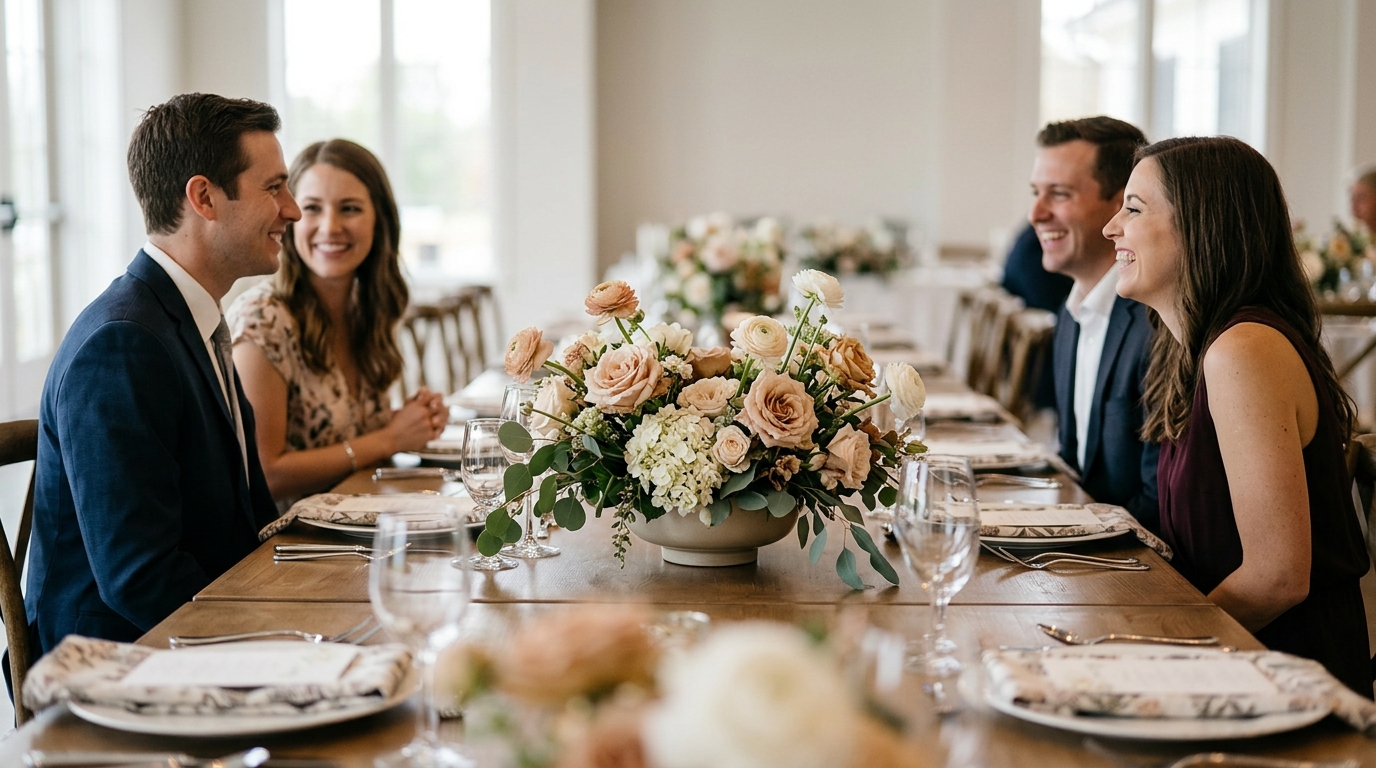
For most seated dinners, a floral centerpiece should stay low enough to keep faces and eye contact unobstructed. A reliable guideline is under 12 inches tall for “low” arrangements that sit below most guests’ sightlines. If you want a more dramatic look, go tall—but keep the flowers and greenery above 24 inches so the visual weight is lifted over guests’ heads rather than blocking the middle of the table.
Centerpieces that land between roughly 12–24 inches often become the problem range. At that height, stems, blooms, and decorative accents tend to sit right where guests naturally look when talking across the table. If you’re aiming for easy conversation, skip this mid-height zone whenever possible.
Low arrangements (generally 8–12 inches including the container) work well for round tables and long banquet tables because they keep the view open. They also make it easier to pass shared plates, reach place cards, and see speeches without craning around florals.
Tall designs can absolutely be guest-friendly when they’re engineered correctly. Choose a slim stand or elevated vase so the base is narrow, and keep the densest florals high—ideally starting around 24 inches and up. This creates a “window” at eye level so guests can still see each other through the open space below.
Set the arrangement on a fully dressed table and have two people sit across from each other. If either person’s face is partially hidden, adjust: remove height, raise the florals higher, or reduce the width of the design. Also check from multiple seats—corner views can be more obstructed than straight-on lines.
For more sizing tips and examples, read the full guide here: https://estalienn.com/how-tall-should-a-floral-centerpiece-be-so-guests-can-see-each-other/.
Aim to keep the overall footprint modest so place settings stay usable—often around 10–14 inches wide for typical dinner tables. On smaller tables, prioritize height-managed, compact designs so guests don’t feel crowded.









Leave a comment